What have I learned?

Posted on  by mk.adjeimanu

a) What have we learned about participant experiences?

In our participant experiences, I feel as if the SERT team has learned much about the similarities that existed among all the differences within Ryersons student body. Many participants shared different stories that centered similar themes around struggle, identity, resilience and more. It was interesting to listen and see how these themes manifested differently in each story. One thing that that all participants shared in common was that always seemed to be a turning point. Whether it be a shift in spiritual beliefs, or a shift in a program and school. Each story had a turning point which played as a pivotal moment of deeper connection to self and surroundings.

b) What have I learned about research?

In my experience as a researcher, I’ve learned that obtaining/documenting truth is an ethical non-objective process, or at least it should be. The extent of our findings is dependent on our own collective and individual ability to remain in constant and active reflexivity with ourselves. There is an intrinsic connection between the researchers social location/way of navigating the world AND the findings to which the researcher explores. What truths do we render valuable, urgent, in it’s unrefined state before polished and made accessible to the masses?

I definitely haven’t learned everything about research, but I’ve learned a lot about questions that are important to me as I center research in micro and macro aspects of my life.

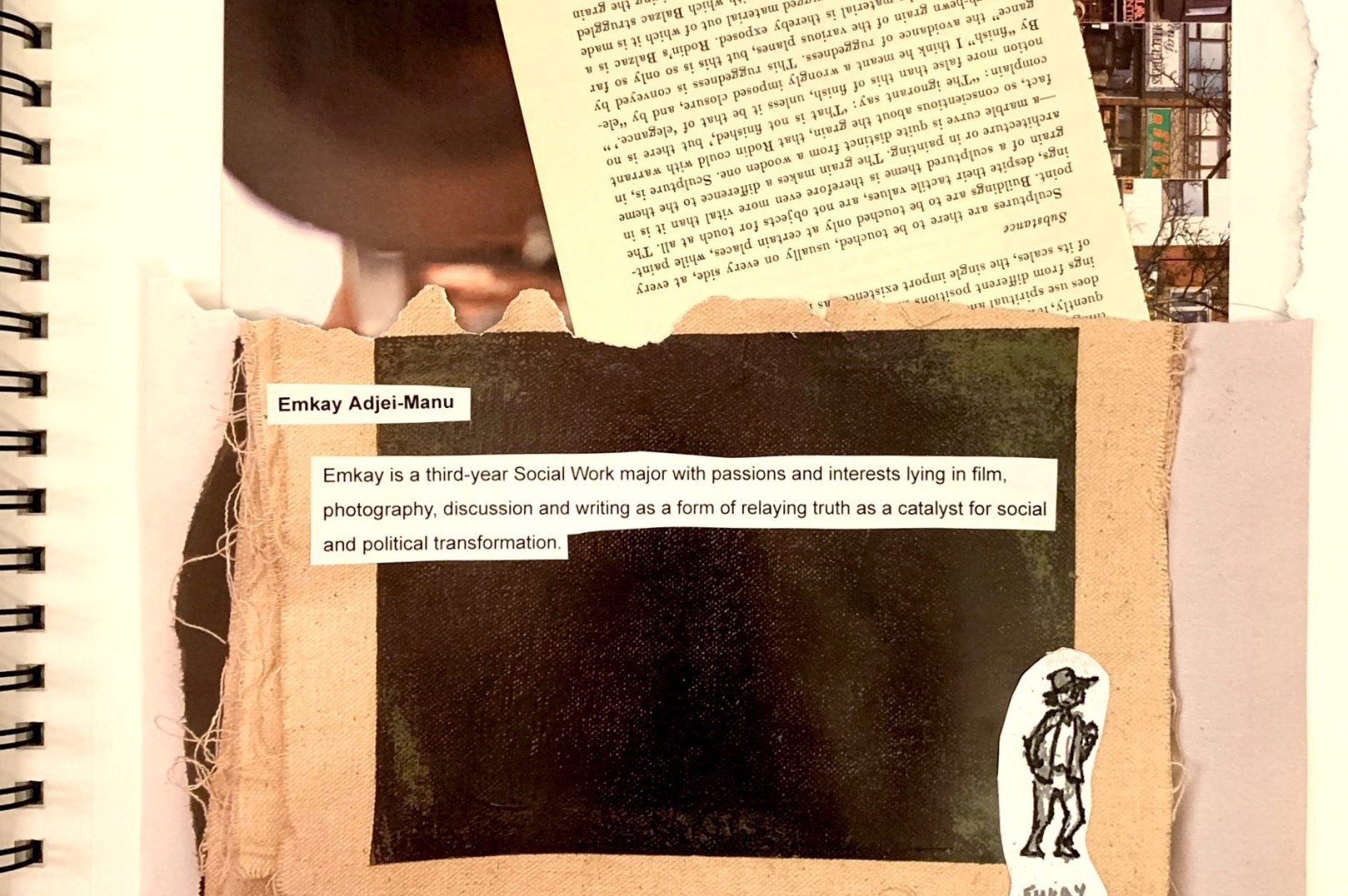
-Emkay

boundary/balance in arts-based research

Posted on  by mk.adjeimanu

hey team,

our last sert session provoked a lot of interesting thoughts and internal dialogue about the boundaries and constraints in arts/narrative-based research. its exciting to think about the future and the power that narrative research holds, because in a way, it means that, in the future, there were will be an increase of nuanced, critical, and relevant knowledge that accurately represents lived experiences. the validity of lived experiences being recorded and explored as a way to transform as opposed to further oppress makes me very hopeful about the discourse around research and what that means for communities who have been violated by this historically colonial/western practice.

i didn’t get a chance to read Petra Munros’, The Future of Narrative, however, I did look over the abstract and all I can say is that I’m eager to dive into this read. themes around re-thinking research, honoring the practice, and objectifying stories, seem to be at the center of this article and I’m excited about the ways in which this read will further transform my current understandings of our own work and practice here at sert

as we discussed in our last session, boundary and balance in the way we conduct our focus-groups seemed to be the theme of our discussion. questions like: are we sharing too much? are we asking the right questions? how objective is too objective? what if we CAN relate to the shared stories? what if we CAN’T relate to the shared stories? what do we do? how do we de-center objectivity while simultaneously honoring the sacredness of our stories?

all very valid, critical questions…that we’re still figuring out the answer to. however i think it’s interesting to see how traditional research methods still inform and influence our understanding of what arts/narrative-practice is and how it differs from the traditional standard.

I’m excited to explore and discuss the answers to the long list of questions and *concerns* we may have about how we conduct research and I’m excited about the new findings it will lead us to. Both individually, and collectively.

-Emkay

“Everything Starts with a Jam Session”: Grounding our Teamwork

Posted on  by Tesni Ellis

Although sometimes it happens naturally, in an “emergent” way if you will, it’s sometimes helpful to set ground “rules” from the beginning of a new project or team. Rules is a funny word. Maybe I’d prefer agreement? Or… feelings? That’s where my head is at lately. So, setting ground feelings. Some things we agree upon as a team that are important to us, so we can work together and make great things.

Like John’s noticing of the word “arrangement” in his life – I’ve been thinking a lot about “relationship” lately. And about the “contract” of sorts you enter into with someone when you work together, develop together, be together. And I think for me, one of the grounding feelings I need in a team is an effort to try and practice care for each other and the different stages in our learning we might be in, the different language we might use, and the different experiences that have brought us to where we are now. And understanding that everyone processes information differently. Personally, I take time to process and it’ll often be a few days later that I’ll bring something back up that has been taking up space in my brain.

I like the way adrienne maree brown puts it in “Emergent Strategy”, a book about transformative justice and movement making – “Self-transformation: Both/all people in the relationship and community are committed to their own self-transformation. We see ourselves as microcosms of the world, and work to shift oppressive patterns in our bodies, hearts, minds, speech, interactions, liberating ourselves into purpose, liberating our communities into new practices. We each set the pace of our own transformation.” (emphasis mine, p. 194)

Another word I really like is the word “practice.” I like to think of my work as a practice. It leaves more room for problem-solving, for accepting challenges that arise, and for working through things as a process, in a non-linear, non-fixed, non-normative way.

So, what are your ground “feelings” or rules – what do you need for a team to work together, safely, collaboratively?

-Tesni

Addendum: Some of what we talked about as a team include the following:

  • understanding differences
  • “Everything starts with a jam session” – openness to improvising, ambiguity, figure it out as we go
  • combining our strengths
  • communication; honesty
  • productive communication
  • understanding various styles of addressing things
  • language
  • processes of learning and unlearning
  • empathy and positivity
  • determination
  • we are searchers
  • none of us are experts
  • collaborative leadership